
Those that built, sustained, and lived in the village
Who were those within the early village network?
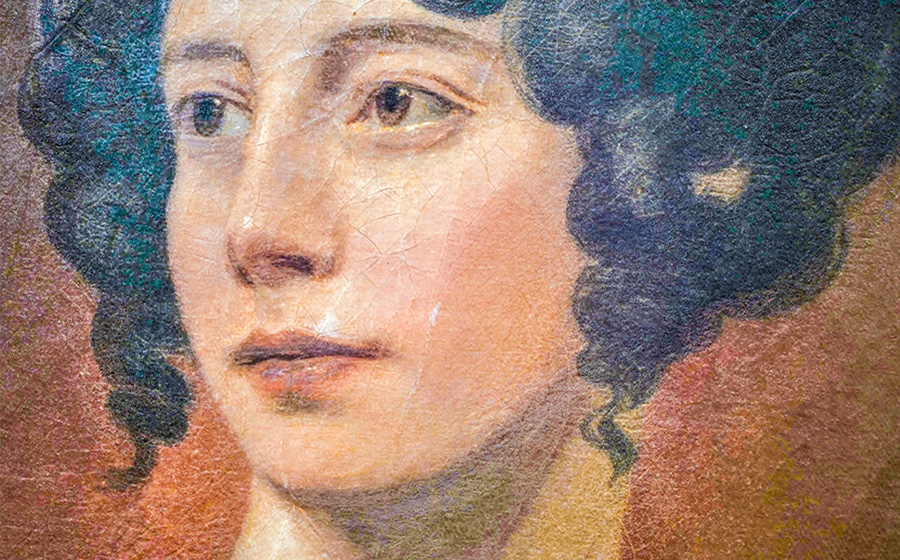
The building of Talbot Village is widely credited to the ‘sisters’, Georgina and Marianne Talbot. Certainly, both were instrumental in its inception and survival. However, many early sources suggest that it was Georgina, the younger sister, to have been the prime driver of this project with her older sister, Marianne (or Mary Anne), taking up the mantle after Georgina’s death. Clearly the Talbot Estate owes its existence and survival to both sisters, though their roles appear to have been quite different from each other, and at different times.
Beyond the two sisters though there would have been many other people involved in the actual design, building, and success of the village. This exhibit is therefore focusing on those that were connected to the village during the lives of the sisters and thereby would have had some personal or professional contact with them. The few names that frequently emerge in the early sources are architects, builders, clergy, tenants, residents, a bellringer, school master, the trustees, an organist and a sculpturer. There are probably many more that have not been captured, but the following seems to include a sample of the key ones, though some still remain a little speculative!
Landowners: Sir George Gervis / William Driver?
Some sources suggest that the Talbots bought land in the Bournemouth area around 1835 from Sir George Gervis and William Driver, however other sources suggest that they only came to the area in 1842. It is therefore not yet clear which year is correct and if they came directly in contact with Sir George Gervis and William Driver.
Architect: Christopher Crabb Creeke (1820–1886)
Christopher Crabb Creeke was a key figure in the development of Bournemouth and is celebrated in the joint stature with Lewis Tregonwell outside the BIC (the Bournemouth International Centre). He came to Bournemouth from London in the early 1850s and was first commissioned by Sir Percy Florence Shelley (son of the famous author Mary Shelley) to make changes to their property at Wick, Boscombe House. Creeke then became fond of Bournemouth and chose to settle in the town as he considered it would be good for his wife who was not in the best health.
During the years in the town, Creeke became recognised as someone that could bring some order to the development of the town. He took on many civic roles in the burgeoning town, such as the first surveyor and Inspector of Nuisances, the Architect and Surveyor to the Burial Board, a town commissioner, surveyor to the Local Board of Health, as well as being a volunteer officer with the 19th Hants Rifle Volunteers, and a personal surveyor to Mr. Clapcott Dean. In his many roles, he was active in developing the town’s new sanitation system (rather cheekily captured by the famous Tregonwell-Creeke statue), the local road network, parts of the cemetery at Rush Corner (i.e. Cemetery Junction), the Belle Vue Assembly rooms, several ecclesiastical buildings, the first town jetty, in ensuring the fields near the centre could be turned into Bournemouth’s pleasure gardens (the ‘green lung’), in designing the ‘Fairmile House Workhouse’ (later to become Christchurch Hospital), as well as Dean Park Cricket Pavilion.
Creeke had an office in the Town Hall Chambers and lived at Lainston Villa (built c1862) where the BH2 complex now sits. Lainston was occupied previously by John Tregonwell, was used for a period for the Bournemouth Improvement Commission and later became the Garden Tea House.
As for Talbot Village, he must have had a close working relationship with Georgina Talbot as he advised on the early development of the Talbot Estate in the area, especially with resolving some of the more complex legal issues around land, boundaries and mortgages. He was also the architect for the village alms-houses.
Architects: G. Evans (c. 1800-1873) and W. J. Fletcher (c. 1842-1913).
Evans and Fletcher were two architectural partners from Wimborne who Georgina Talbot directed to design the village church, St. Marks. George Evans was also at some point the Surveyor of Dorset after his father. Walter Fletcher was mentioned in Miss Talbot’s will.
Builder and agent: James McWilliam (1824–1897)
After Creeke, McWilliam was a second key player in these developments. He came from Scotland and became an influential builder and contractor in the new town. He was the first Rate Collector in the town, a foreman to Mr Tuck (an established local builder), held several civic roles such the president of the town council, chairman and commissioner of the Bournemouth Improvement Board, chairman of the Local Board of Health, helped establish the Bournemouth Fire Brigade, and was a mayoral candidate before being disqualified due to circumstances associated with his influence. McWilliam was involved in the development of Winton and Moordown, made additions to the Mont Dore (which is now the Town Hall), worked on improving the seafront, was a representative of Westover, and became a volunteer in the local Territorials. Due to his influence in the town he is recognised by having a road named after him in Moordown.
As for Talbot Village, McWilliam as a contractor and foreman directed much of the building of the village, farmhouses, lodge cottages in Wimborne Road for Miss Talbot, and made later alterations to her Bournemouth home, Hinton Wood House. McWilliam was also for many years a trusted agent for Marianne and the Talbot Estate and was well known to the residents of the village.
He took over the business built by David and Peter Tuck and renamed it McWilliam & Son. He lived at ‘Cairnryan’ on Poole Road.
Farmers, builders, brickmakers: David (c1810-1860) and Peter Tuck (c1835-c1900)
David Tuck was a local man who was actively involved in both agriculture and construction and was probably the first builder and road maker in the new town. He also held land and property tenancies and worked on many projects for Sir George Gervis. He was tasked early on to supervise the clearing of the land for Talbot Village, as well as supervising the construction of the cottages and the farm buildings within the Talbot Estate. James McWilliam (above) served as his foreman for some of this time. Tuck also served as a Bournemouth Commissioner between 1856 and 1860. He took on an 80-year lease to erect No 1 Westover Villas in 1837 and lived at Boscombe Farm for some time.
His son, Peter Tuck, served as a chairman and commissioner of the Bournemouth Improvement Board and worked with C. C. Creeke on exploring how the first pier for the town should be designed. He also was involved in supervising the development of the skating rink in the Winter Gardens. Peter Tuck was reported to be living at Willow Cottage, with offices at Cliftonville, Exeter Road. Later he lived at Brookside (renamed the White Hermitage and now the Hermitage Hotel) and was the builder and owner of the Haven Hotel at Sandbanks.
Headmaster: Samuel Kerley (1809-1884)
Kerley was appointed by Georgina as the first headmaster at the school. Kerley was registered in the 1861 census as living at Vine Farm (as a farmer of 23 acres?). He had six children with one being named ‘Young Sam’. The latter tolled the bells at the first service in 1870 and for 66 years until 1936. He was also a People’s Warden and a member of the Kinson Parish Council. Georgina Talbot invited Mrs Kerley, the headmaster’s wife, to the consecration of St. Mark’s Church in 1870. Sadly, Georgina herself passed away that very night just before the ceremony.
Master, second headmaster and resident: Luke Hindmarsh
Hindmarsh started a logbook for the school from October 1877 and lived in the village.
Preacher: Laybourne Popham
In 1862, it seems that Popham gave a thanksgiving service in the school before the church was built to commentate the establishment of the Talbot Estate.
Sculpturer: Richard Lockwood Boulton (c.1832–1905)
Boulton was a stone maker and sculptor with considerable experience on ecclesiastical projects around England and was apparently influenced by the ‘Caen’ style. He was tasked with the stonework in the church contributing significantly to its decorative and architectural character.
Clergy: Rev. Wanklyn
Apparently, Georgina was very much encouraged and influenced by a local clergyman Rev. Wanklyn. The records show a Rev. James Hibbert / Hebbet Wanklyn operating a boarding / preparatory school in Pokesdown around 1859-1875 which may have been the so-called influencer. There was at least another one or two Rev. Wanklyns (an Edward, Edwin or James?) associated with St. Michaels Church on Poole hill around 1875 but they appear to be of a later period and may not have had contact with the Talbot sisters.
Clergy: Rev. Edwin Coombes (1827-1887)
In an ecclesiastical role, Rev. Coombes was the first curate-in-charge of St. Marks, the village church, from 1870 to 1887. At that time, St. Marks was under the Parish of Kinson. Coombes performed the very first service at St. Marks for Georgina’s funeral and continued until the passing of Marianne in 1885. Afterwards, he became the Vicar of Hamworthy.
Clergy: Rev Daniel and Rev. Eliot
Mary Anne had some contact with Revs. Daniel and Eliot. However, it appears that she had a less cordial with Rev. Daniel of Kinson due to differences about St. Marks church. Equally though she had a very personal with Rev. Philip Frank Eliot of Bournemouth Holy Trinity. Through this latter relationship she may have known his second wife, Mary Emma Pitt from an aristocratic family, who helped at the school and was a close associate of Queen Victoria. Rev. Eliot also buried Mary Anne when she passed in 1885, as well as being at Queen Victoria’s funeral in 1901, and passed himself in 1917.
Organist: George William Gallop (1831-c1906)
Gallop was the organist at St. Mark’s church for many years (certainly between 1883 and 1906, but possibly longer). He was reported to being blind and had a partly adapted cottage close to the church.
Residents:
The early census, birth, and burial records list the following family names as being connected to the village as residents or though some other connection. These include:
Barnes, Barter, Bartlett, Bird, Bishop, Blandford, Bleathman, Bridle, Budden, Bugden, Butler, Carter, Cherrett, Clark, Cole, Collins, Cousins, Cull, Cutler, Daniels, Drew, Dunning, Everest, Foot, Frampton, Gallop / Gallopp, Geall, Gillett, Godden, Hawkins, Henstridge, Hindmarsh, Holloway, Hurley / Kerley, James, Kiddle, King, Leader, Legg, Lewis, Loader, Long, Mayne, Nippard, Purchase, Rabbetts / Rabbets / Rabbits, Rendall, Rendell, Rigler, Robbins, Robins, Sims, Slade, Southgate, Stickland, Stone, Taylor, Troke, Vatcher, Ware, Wellman, Wright, Yeats.
Specific residents or estate tenants include:
Resident /farmer: Henry Holloway (c1814-1880)
Henry Holloway farmed land in the area as well as on the Talbot Estate, possibly including Lollipop Farm. St. Marks church was built on the land originally owned by him. Two of his children had strong connections to Talbot Village with their own children being baptised at St. Marks and attending the Talbot Village School. Many more Holloways were connected to the village in later years, but were not necessarily related to each other.
Resident / farmer: James Troke (1825-)
Troke was registered in the 1861 census as being a farmer of 10 acres.
Resident: Cornelius Barnes (1818-1868)
Cornelius Barnes lived in 122 Wimborne Road, one of the cottages in Talbot Village. He was a labourer for Miss Talbot, possibly helping to build St. Marks church, despite having a disability. Left £20 a year in Georgina’s will
Residents: George (c1817-1893) and James Carter (c1818-1888)
Lived on the Village and presumed to have helped clear the land in the early years. James was left £20 a year in Georgina’s will.
Tenant farmer: Henry Laidlaw (c1826-1904)
Laidlaw was a tenant farmer on the Talbot Estate, possibly keeping horses in a paddock on one of the farms. He was also a job master and a carriage proprietor and had his own livery business in Old Christchurch Road. He traded under the name of “Tally Ho” and is credited with establishing the first coach and mail service in Bournemouth. He was also a town commissioner.
Talbot Village Trust
In 1862 Georgina had begun the work of setting up a charitable trust to provide for the future of the village. Her sister, Marianne, continued this with appointing trustees from distant relatives and local gentry.
Trustees
There were several iterations of the Deeds of Settlement associated with the Alms-houses, Endowment Fund, the village, the Talbot Estate, etc. The early trustees and governors that would have had direct contact with the sisters include:
Trustee: The Rt. Hon. Edward Berkeley Baron Portman (later Viscount Portman) (active 1862-1888) Large landowner and a Lord-Lieutenant of Somerset
Trustee: The Hon. William Henry Berkeley Portman (active 1862-) An MP for Dorset, a significant landowner, commissioned the building of Bryanston as a private residence which eventually became a well-known school.
Trustee: John Clavell Mansel (active 1862-) An active botanist and geologist, co-founder of the Dorset Natural History and Archaeological Society, and a High Sheriff of Dorset.
Trustee: George Carr Glyn (later Baron Wolverton) (active 1862-1873; 1884-) Banking family, military office.
Trustee: John Dansey (active 1862-1867)
Trustee: William Stuart Falls MD (active 1867-1889)
Trustee: Sir Richard G. Glyn (active -1867) Local landowner, a veteran of the Crimean War, and a High Sheriff of Dorset.
Trustee: Martin Kemp Welch (active 1867-1884)
Trustee: Willett Ayde (active -1873)
Trustee: William Westby Moore (active 1888-) Well-connected Hampshire resident and military officer
Trustee: Shelley Leopard Lawrence Scarlett (5th Baron Abinger, 1872-1917), (active: 1910-1917). Mary Anne apparently knew the him when he was a child through her connections with Percy and Lady Shelley.
Financial advisor and heir: Ronald Ruthven Leslie-Melville, Earl of Leven and Melville (1835–1906)
A much later figure to the town, Lord Leven was a close associate of the Talbot sisters (not a blood relative) and financial advisor and heir to Marianne. He held many civic roles in Scotland, was a deputy lieutenant of London, a member of the Privy council, served as a director of P&O shipping as well as at the Bank of England. After Marianne’s passing, he continued with the sister’s philanthropic work and established Talbot Manor, a home for Boy’s close to the village, which he then handed over to the Society of Waifs and Strays to run. He is possibly best associated with this Boy’s home and several Scottish-named roads in the area rather than Talbot Village specifically.
Conclusion
There were clearly many other individuals that were connected to Talbot Village and Talbot Estate during the living years of Georgina and Marianne Talbot. Some of the key and most influential have been given above but search continues to identify them and, if necessary, to correct any errors given above.
Martin Senior, 9 September 2026
Sources:
- Armitage, R. Views of the Founder of Talbot Village, The History of Talbot Village Dorsetshire (Library reference: LHU7691)
- Armitage, R. Talbot Village Collection file, (Library reference: 620252194)
- Bats in Churches Project (n.d.) Talbot, St Marks. Available at: https://batsinchurches.org.uk/projects/talbot (Accessed 27 August 2026).
- Bournemouth Council (1899–1899) Vol. 3. [Minutes of meetings held during the tenure of Mayor Hoare, April 1899 – November 1899]. Bournemouth: Bournemouth Council Archives.
- Bournemouth Echo (1941) 'Devoted service to Talbot Village: Thirty-three years' work of the Rev. B. R. Clutterbuck', 7 August.
- Bournemouth Library (n.d.) Local Biography No. 21. Unpublished local studies file. Bournemouth: Bournemouth Library.
- Bournemouth Library (n.d.) Local Biography No. 37. Unpublished local studies file. Bournemouth: Bournemouth Library.
- Bournemouth & District Civic Society (1973) Talbot Village: A case for conservation. Bournemouth: Bournemouth & District Civic Society.
- Bournemouth Borough Council (1976) Talbot Village Conservation Area: Local Plan, Alternative Schemes, Consultative Document. Bournemouth: Bournemouth Borough Council.
- Bournemouth Times and Directory (1936) ‘Founder of Talbot Model Village. Work of Miss Georgina Talbot. Commemorated at St. Mark's’, Bournemouth Times and Directory, 6 March.
- Cardiff and Merthyr Guardian (1870) Preferments: Rev. Edwin Coombes, St. Mark’s, Talbot Village. Cardiff and Merthyr Guardian, 5 November, p.6.
- Christchurch Times (1872) Article on Miss Georgina Talbot and Talbot Village, Christchurch Times, 2 November 1872.
- Christchurch Times (1904) Saturday, 16 July, p. Available at: British Newspaper Archive. (Accessed 2 September 2026).
- Craven & Co. (c.1857) Craven’s Commercial Directory of Hampshire. [Place of publication unknown]: Craven & Co.
- Dorset County Chronicle (1906) Thursday 05 April 1906. Dorset County Chronicle and Gazette Echo (1968) 'Centenary of St. Mark's, Talbot Woods: They created a model village 100 years ago', 19 April.
- Dorset County Chronicle and Somersetshire Gazette (1883) Petty sessions, 2 August, p7.
- Dorset County Chronicle and Somersetshire Gazette (1885) Petty sessions, 16 July, p.
- Echo (1946) ‘Romantic story of Talbot Village: Tribute to the gracious lady who founded it’, Echo, 15 October.
- Edwards, E. (1981) A history of Bournemouth: the growth of a Victorian town. Chichester: Phillimore.
- Hunt, E. & Co. (1851) Hunt & Co.’s directory of Dorsetshire, with part of Hants and Wilts. London: E. Hunt & Co.
- G. Harrod & Co. (1865) J. G. Harrod & Co.’s Postal and Commercial Directory of Hampshire with the Isle of Wight. [Place of publication unknown]: J. G. Harrod & Co.
- Keble Hotels & Restaurants Ltd. History | The Hermitage Hotel. The Hermitage Hotel. Available at: https://www.hermitage-hotel.co.uk/about-us/history (Accessed 30 August 2026).
- Kelly & Co. (1855) Post Office Directory of Hampshire, Wiltshire, and Dorsetshire. 3rd edn. London: Kelly & Co.
- Kelly, E. R. (ed.) (1867) The Post Office Directory of Hampshire, including the Isle of Wight. London: Kelly & Co.
- Kelly, E. R. (ed.) (1875) Post Office Directory of Hampshire, including the Isle of Wight, Wiltshire & Dorsetshire. London: Kelly & Co.
- Ladell, A. (n.d.) St Mark’s School, Talbot Rise, Talbot Village, Bournemouth, Dorset. Flickr. Available at: https://www.flickr.com/photos/alwyn_ladell/albums/72157662381112736 (Accessed: 29 July 2026).
- Marshall, V. (trans.) (n.d.) Talbot Village Baptisms, 1870–1906: Parish Registers (DHC PE/TBV RE 1/1). Dorset Online Parish Clerks (OPC). Available at: https://opcdorset.org/TalbotVillage/TalbotBaps.htm (Accessed: 1 September 2026).
- Marshall, V. (trans.) (n.d.) Talbot Village Burials, 1870–1903: Parish Registers (St Mark’s, Talbot Village). Dorset Online Parish Clerks (OPC). Available at: https://opcdorset.org/TalbotVillage/TalbotBurs.htm (Accessed: 1 September 2026).
- Mate, C.H. & Riddle, C. (1910) Bournemouth: 1810–1910. The history of a modern health and pleasure resort. Bournemouth: W. Mate & Sons Ltd.
- May, V. and Marsh, J. (eds.) (2010) Bournemouth 1810–2010: From smugglers to surfers. Wimborne: Dovecote Press.
- Medlicott, C. (2013) ‘From the Archives’, February.
- Medlicott, C. (2013) ‘From the Archives’, March.
- Medlicott, C. (2013) ‘From the Archives’, April.
- Medlicott, C. (2013) ‘From the Archives’, July / August.
- Medlicott, C. (2013) ‘From the Archives’, September.
- Morning Herald (London) (1824) Social news: Misses Talbot to give a rout at their house in Burlington Street, 13
- Morning Post (London) (1834) Fashionable Arrivals: Sir George and the Misses Talbot at Hanover Square, 10
- Morning Post (London) (1849) Sir George Talbot and family arrive in Grosvenor Square from Bournemouth, 29 January,
- OPC Dorset (n.d.) Talbot Village Baptisms 1870–1906: Parish Registers. Available at: https://opcdorset.org/TalbotVillage/TalbotBaps.htm (Accessed: 29 July 2026).
- Poole & Dorset Herald (1859) Donations list including Miss Georgina Talbot and other benefactors, Poole & Dorset Herald, 17 February 1859. P5.
- Poole Museum Society. (2018, September 19). The End of the Sands – the Haven Hotel Story. Poole Museum Society Blog. https://poolemuseumsociety.wordpress.com/2018/09/19/the-end-of-the-sands-the-haven-hotel-story
- Popham, D. and Popham, R.M. (1985) The book of Bournemouth. Buckingham: Barracuda Books
- Salisbury and Winchester Journal (1852) Bournemouth: Miss Georgina Talbot and the Labouring Classes at Kinson, 27
- Salisbury and Winchester Journal (1863) Petty Sessions: Theft at Kinson, 26 December, 8.
- Slater, I. (1852–1853) Slater’s (late Pigot & Co.) Royal National and Commercial Directory and Topography of the Counties of Berkshire, Cornwall, Devonshire, Dorsetshire, Gloucestershire, Hampshire, Somersetshire, Wiltshire, and South Wales. Manchester and London: Isaac Slater.
- St Mark’s Church, Talbot Village (1968) The history of Talbot Village: in commemoration of the centenary of the church, May 5th to 12th, 1968. [Publication details unknown].
- Stead, M. (trans.) (n.d.) Parish of Kinson: 1861 Census (RG9/1339). Dorset Online Parish Clerks (OPC). Available at: https://opcdorset.org/KinsonFiles/1861Kinson.htm (Accessed: 1 September 2026).
- Stead, M. (trans.) (n.d.) Ecclesiastical Parish of Kinson: 1861 Census (RG9/1339). Dorset Online Parish Clerks (OPC). Available at: https://opcdorset.org/CanfordMagnaFiles/1861Canford-2.htm (Accessed: 1 September 2026).
- St Mark’s C.E. Primary School (2026) History of the School. Available at: https://www.st-marks.bournemouth.sch.uk/history-of-the-school (Accessed: 23 July 2026).
- Staffordshire Advertiser (1850) Misses Talbot, 9 November, 7.
- Streets of Bournemouth (n.d.) The Day Collection Index (by Image ID).
- Talbot Village Residents Association (n.d.) History. Available at: https://talbotvillage.org.uk/about/history (Accessed: 29 July 2026).
- Unknown author (n.d.) Bournemouth Mayors with Moordown connections. Available at: https://www.jp137.com/lts/Moordown.Mayors.pdf (Accessed: 23 July 2026).
- Western Gazette (1887) Church of England: Preferment of Rev. E. Coombes to Kinson with St. Mark’s, Talbot Village. Western Gazette, 12 August, p2.
- Western Gazette (1904) Friday, 15 July, p. Available at: British Newspaper Archive. (Accessed 2 September 2026).
- Western Gazette (1906) Possession of a Cottage and Rent: George William Gallop, organist. Western Gazette, 6 April, p.4.
- White, W. (1859) History, Gazetteer, and Directory of Hampshire and the Isle of Wight. Sheffield: Robert Leader; London: Simpkin, Marshall & Co.